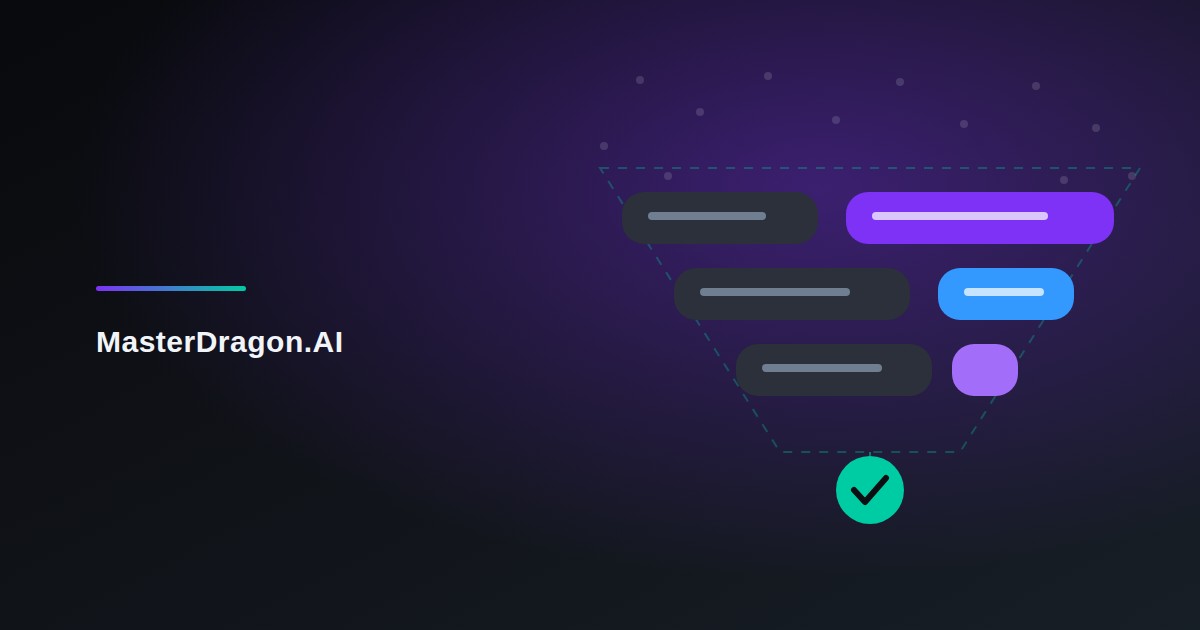


For twenty years digital marketing assumed a sequence: ad, click, landing page, form, email, purchase. That sequence was built for markets where the internet arrived through the desktop and the relationship was carried by email. In emerging markets the internet arrived through the phone and the relationship is carried by messaging. The consequence is uncomfortable for the classic playbook: the funnel stopped being a succession of pages and became a single conversation thread.
The short answer: conversational marketing means designing the commercial relationship as a continuous dialogue in the channel where your audience already is. In emerging markets that is not frontier innovation, it is adaptation to a habit that already exists, and it is where conversion, acquisition cost, and repeat purchase are being decided today.
What is conversational marketing, and how does it differ from the traditional funnel?
The traditional funnel moves the person between surfaces. The conversational one keeps them still and moves the information to them.
In the classic model each stage has its own surface and each jump loses people: ad to page, page to form, form to email, email to cart. Every transition is a chance to abandon and a place where context is erased.
In the conversational model all five stages happen in the same place. The person asks about a product, the agent understands their case, recommends, quotes, schedules, and then follows up, all in the thread, with the history intact. There is no restart because there is no change of surface.
That difference is not cosmetic, it is economic. Every surface you remove is a leak you close.
Why do emerging markets lead here rather than lag?
Because they do not have to unlearn the previous habit. They never had it.
Here is the real scale of what we are discussing. FIG-1 shows the connected user base in six emerging markets, and it reads best alongside one behavioral fact: in Brazil, 8 out of 10 consumers prefer messaging to communicate with a business [2].
Data
| Market | Internet users (millions) |
|---|---|
| India | 1,030 |
| Indonesia | 230 |
| Brazil | 185 |
| Mexico | 110 |
| Nigeria | 109 |
| Philippines | 98 |
Look at penetration, not only at volume: Brazil is at 86.9%, the Philippines at 83.8%, Mexico at 83.5%, and Indonesia at 80.5%, while Nigeria is at 45.5% and still growing [1]. In most of these markets connectivity is no longer the constraint. The constraint is what you do when the person writes to you.
And there is a detail that often goes unnoticed: when the large platforms test what is new, they test it here. Meta reported that its early business AI deployments are running in Mexico and the Philippines, with over 1 million weekly conversations between people and business AIs on its messaging platforms [3]. These markets are not the product's last stop. They are the laboratory.
How do we know this is not a passing fad?
Because the money already moved, and it is reported in financial statements.
The hardest signal to argue with is not a survey, it is a revenue line. Paid messaging within WhatsApp crossed a $2 billion annual run rate in the fourth quarter of 2025, according to Meta CFO Susan Li [3]. And the accounting line where that business lives grew sharply in the same period, as FIG-2 shows.
Data
| Quarter | Revenue (US$ million) |
|---|---|
| Q4 2024 | 519 |
| Q4 2025 | 801 |
In the same report, click-to-message ads revenue grew more than 50% year over year in the United States, driven by the formats that take people from a site into a conversation [3]. When the fastest-growing ad format is the one that ends in a chat, the debate about whether conversation is a serious channel is over.
What changes in practice, stage by stage?
The five stages still exist. What changes is where they happen and what moves them.
Table 1. The traditional funnel versus the conversational one.
| Stage | Traditional funnel | Conversational funnel |
|---|---|---|
| Discovery | Ad leading to a page | Click-to-message ad opening a thread |
| Qualification | Form with required fields | Natural questions inside the conversation |
| Consideration | Product page and comparisons | Recommendation explained for the person's case |
| Conversion | Cart and payment gateway | Quote, booking, or payment inside the thread |
| Retention | Email campaigns | Follow-up in the same thread, with history |
The point of the table is not the right-hand column, it is that the person never changes place. Context survives from one stage to the next without anyone rebuilding it.
What makes a conversational agent sell rather than annoy?
Five rules. All five are about design, not technology.
1. The person started or accepted the contact. Messaging is a personal space, and unsolicited advertising there is punished with a block, not with indifference. Permission is not an awkward legal requirement: it is what keeps the channel working tomorrow.
2. It answers fast and with something useful. The channel's advantage is immediacy, and a generic reply destroys it. 88% of consumers expect faster responses than a year ago [5]. The first answer should resolve or advance, not acknowledge receipt.
3. It does not make people repeat themselves. If the person already said what they need, the agent cannot ask again three messages later. 74% get frustrated having to repeat their story [5]. In a continuous thread that failure is far more visible than in a form.
4. It knows when to stop and hand over to a person. Closing a complex sale, negotiating terms, or handling a delicate complaint is still human work. The agent must recognize the signal and hand the case over with full context.
5. It explains why it recommends what it recommends. 95% of consumers want to know why an AI decided what it decided, and only 37% of companies explain it today [5]. In a purchase recommendation, that explanation is literally the sales argument.
For the engineering detail behind these rules, we cover it in redesigning support for the agentic era.
What are the most expensive mistakes?
Three, and all three are strategy problems disguised as technical ones.
- Putting a menu bot on top of a broken funnel. If the process already lost people, automating it just loses them faster. Fix the decision first, then automate it.
- Confusing volume with permission. Blasting messages because the channel is cheap is the most efficient way to burn your list and your number.
- Measuring with page metrics. Bounce rate and time on site mean nothing in a thread. If you do not change the dashboard, you will optimize what does not matter.
The context is worth flagging: Gartner estimates that more than 40% of agentic AI projects will be canceled before the end of 2027, citing cost, unclear value, and weak controls [6]. Technology is not the bottleneck. Discipline is.
How do you actually measure it?
With conversation metrics, not session metrics.
These are the ones we use: response rate, time to first useful answer, share of conversations reaching a concrete action (booking, quote, or purchase), cost per qualified conversation, handoff rate to a human and its reason, and repeat purchase at 30 and 90 days. With that dashboard you can decide what to automate further and what to give back to a person. Without it, all you have is a feeling that the bot is "doing fine".
How to start this week with DragonChat
The strategy is clear. The real problem is that almost nobody has a spare technical team to build it.
That is why we built DragonChat. It turns your knowledge into an AI Expert that lives on WhatsApp: not a generic chatbot, but a version of you trained on your style, your methodology, and your materials, answering in the channel where your audience already is.
Concretely:
- Set up in about 15 minutes, with no code. You connect your account and it runs. No technical team and no consultants required.
- Trained on what is yours. You upload your documents in PDF or DOCX, your frameworks, and your way of answering, and the agent replies with your judgment rather than catalog answers.
- It lives on WhatsApp. Your audience downloads nothing new and learns no other tool.
- It answers 24/7. It serves people while you work with premium clients, sleep, or sit in another time zone.
- You can charge for access. The AI Expert becomes a product in itself, not just a support cost center.
It is the shortest route between understanding that the funnel is now a conversation and having one running. Start at www.dragonchat.co.
If yours is a larger operation instead, with integrations and custom flows, talk to our AI engineers and see our portfolio of shipped AI-native products.
References
- DataReportal. (2026). Digital 2026: country reports (Brazil, India, Indonesia, Mexico, Nigeria, Philippines). https://datareportal.com/reports
- WhatsApp Business and Boston Consulting Group. (2024). Business messaging: a value driver for Brazilian businesses. https://whatsappbusiness.com/resources/resource-library/business-messaging-brazil-bcg/
- Li, S. (2026, January 28). Meta Platforms, Inc. fourth quarter 2025 results conference call [Transcript]. Meta. https://s21.q4cdn.com/399680738/files/doc_financials/2025/q4/META-Q4-2025-Earnings-Call-Transcript.pdf
- Meta Platforms, Inc. (2026, January 28). Meta reports fourth quarter and full year 2025 results. https://www.sec.gov/Archives/edgar/data/1326801/000162828026003832/meta-12312025xexhibit991.htm
- Zendesk. (2026). Zendesk CX Trends 2026. https://cxtrends.zendesk.com/
- Gartner. (2025, June 25). Gartner predicts over 40% of agentic AI projects will be canceled by end of 2027. https://www.gartner.com/en/newsroom/press-releases/2025-06-25-gartner-predicts-over-40-percent-of-agentic-ai-projects-will-be-canceled-by-end-of-2027